
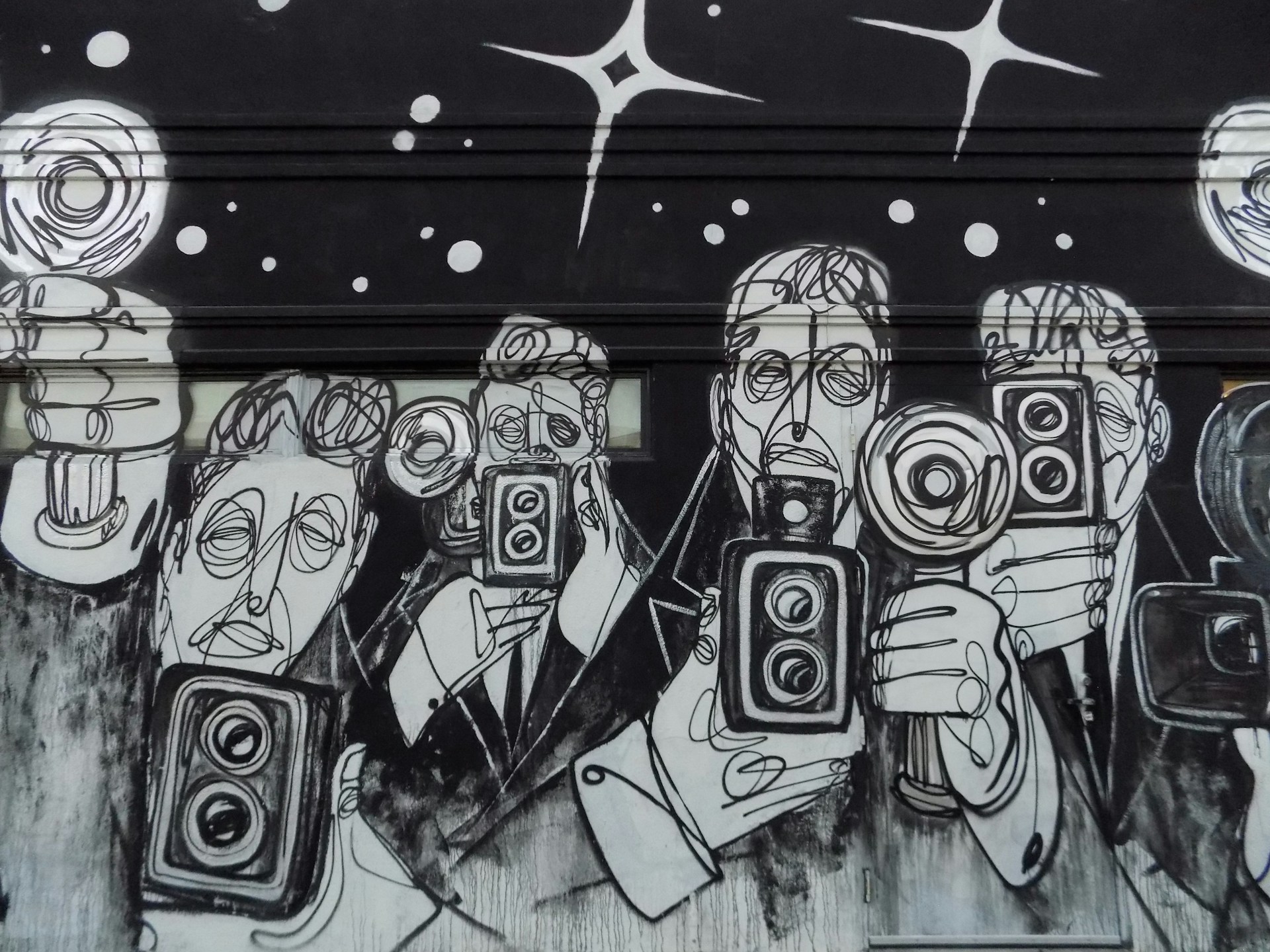
There was a time when identity grew quietly.
It formed in the spaces between childhood and becoming—through scraped knees, awkward conversations, handwritten diaries, and the slow, uncertain process of figuring out who you are when no one is watching.
But today, there is always someone watching.
Or at least, it feels that way.
Social media arrived like a mirror—but not the kind that simply reflects.
This mirror speaks.
It judges.
It compares.
It edits.
And for the youth standing in front of it, still soft with becoming, still learning the shape of their own reflection—it can be both a guide and a distortion.
At first, it feels like connection.
A place to belong.
To share laughter, thoughts, fragments of life.
A place where a voice, once quiet, can suddenly be heard.
And that part is real.
Because somewhere across the world, someone understands your joke, your sadness, your music taste, your midnight thoughts. And in that understanding, there is comfort.
A kind of digital closeness that feels like home.
But slowly, almost invisibly, something shifts.
The mirror starts asking questions you never meant to answer.
Are you enough?
Are you interesting enough? Beautiful enough? Successful enough? Happy enough?
And without realizing it, the youth begin to measure themselves—not by who they are, but by how they are seen.
A number becomes a feeling.
A like becomes validation.
A comment becomes a verdict.
Identity, once something discovered inwardly, starts to form outwardly.
Curated.
Filtered.
Adjusted to fit what is applauded.
And the quiet, imperfect, real version of oneself begins to feel… less worthy of being shown.
There is a strange exhaustion in trying to exist as both a person and a performance.
To live a moment-and simultaneously wonder how it will look when posted.
To feel something deeply-but pause, frame it, caption it, soften it into something more acceptable.
The line between living and presenting begins to blur.
And yet, it would be too simple to call social media the villain.
Because it has also become a place of awakening.
A place where conversations once silenced are now spoken loudly.
Where young voices challenge norms, question traditions, redefine beauty, identity, and belonging.
Here, youth find language for things they were never taught to name.
They find communities that tell them, “You are not strange. You are not alone.”
And that matters.
More than we often admit.
So the influence is not one thing-it is many things at once.
It is empowerment and insecurity.
Expression and comparison.
Connection and isolation.
A paradox that lives in the palm of a hand.
Perhaps the real question is not whether social media shapes youth.
It does.
The deeper question is-how much of that shaping is conscious?
Because identity should not be something that is constantly negotiated with an audience.
It should be something that can exist—even in silence, even without approval.
Maybe what the youth need is not distance from the mirror, but a different relationship with it.
To look-and not lose themselves.
To share-and not shrink themselves.
To exist online, without forgetting how to exist within.
Because behind every profile is a person still becoming.
Still uncertain.
Still growing.
Still deserving of an identity that is not defined by algorithms, trends, or fleeting validation.
And maybe the quietest rebellion, in a world that constantly asks for performance, is this:
To be real.
Unfiltered in a filtered world.
Present in a world of projection.
Certain, at least in this one truth—
That who you are is not something the world gets to decide for you.
Because identity is not built in the spotlight alone.
Sometimes, it is found in the moments no one sees.
And those moments still matter.
More than any number ever could.

No comments yet. Be the first to share your thoughts!